Potentially dangerous or dangerous dog — what is the difference?
This is one of the most common points of confusion among dog owners in Portugal, and the distinction matters: these are two completely separate legal classifications, with very different consequences.
A potentially dangerous breed dog is classified as such because of its breed — regardless of its behaviour. It does not need to have bitten anyone to carry this classification. It is a condition defined at birth, by Ministerial Order (Portaria) n.º 422/2004.
A dangerous dog is classified as such because of something it did — a specific event: it bit a person, seriously injured or killed another animal outside the owner's property, or was declared dangerous by the competent authorities. It can be of any breed.
A potentially dangerous breed dog can legally become a dangerous dog if it attacks someone. The consequences in that case are significantly more serious — we return to this point below.
Which breeds are classified as potentially dangerous in Portugal?
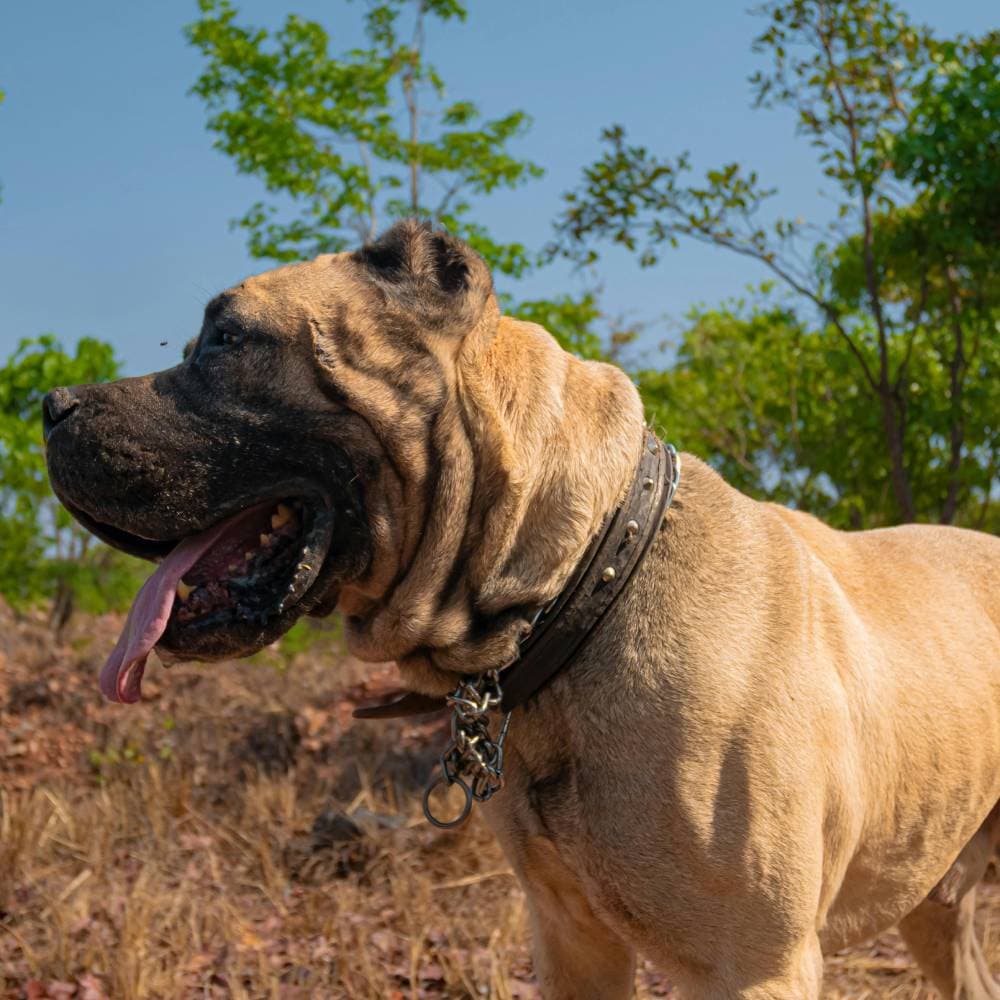
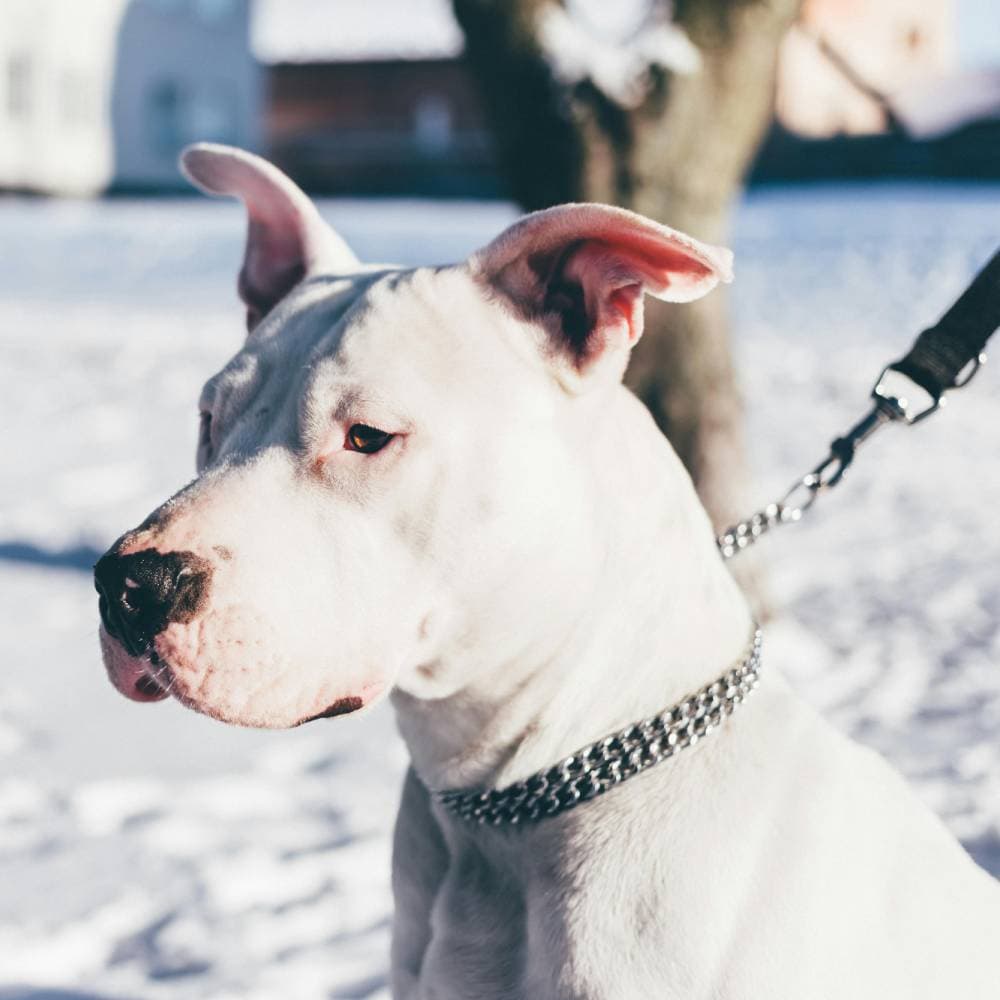
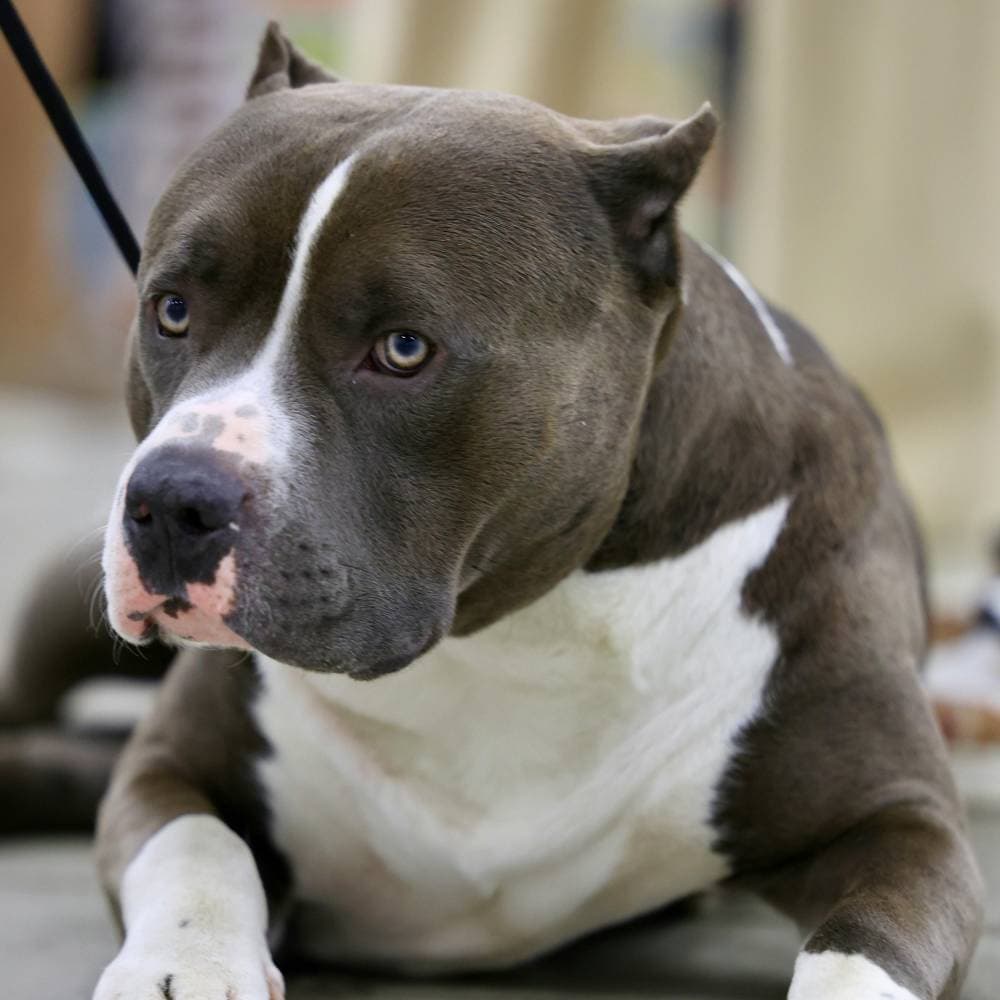
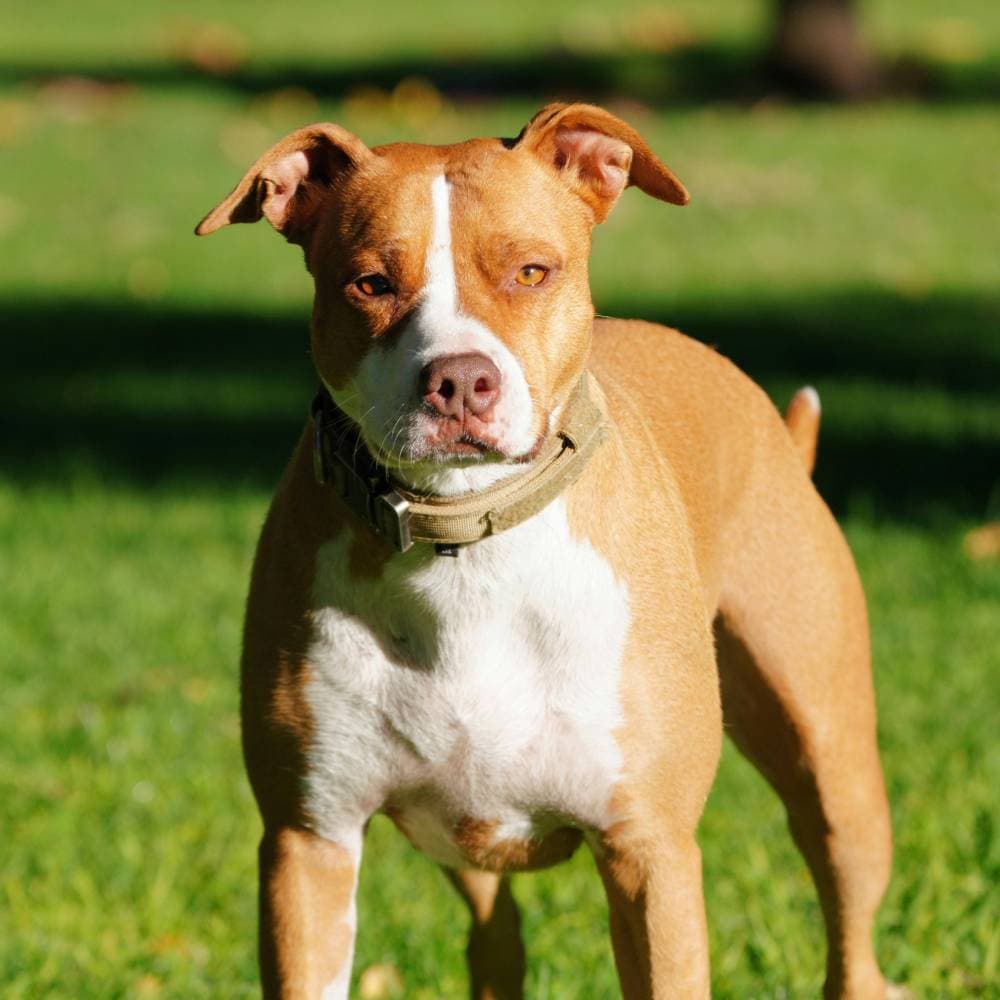
The official list is defined in Ministerial Order (Portaria) n.º 422/2004, of 24 April. The recognised breeds are:
- Cão de Fila Brasileiro
- Dogue Argentino (Argentine Dogo)
- Pit Bull Terrier
- Rottweiler
- American Staffordshire Terrier
- Staffordshire Bull Terrier
- Tosa Inu
First-generation crossbreeds between these breeds, or between these breeds and others, are also included — provided they display a similar physical profile.

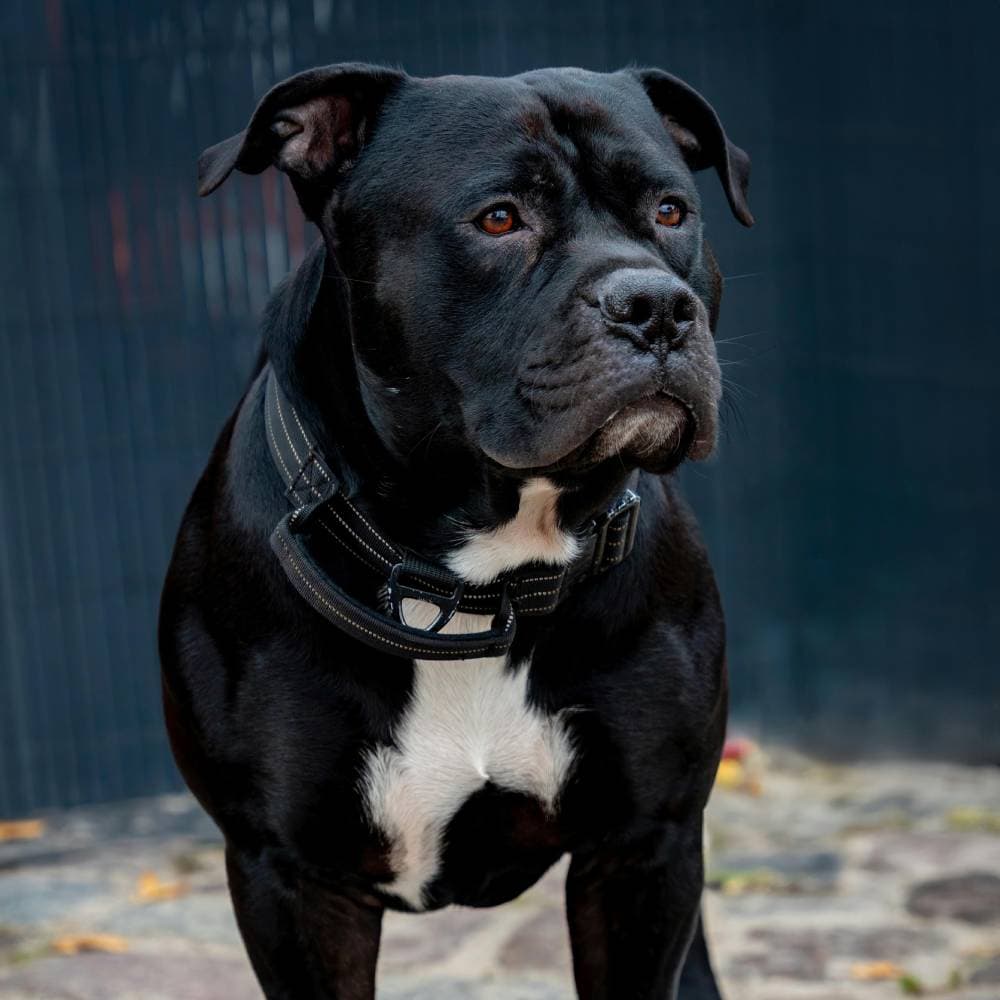
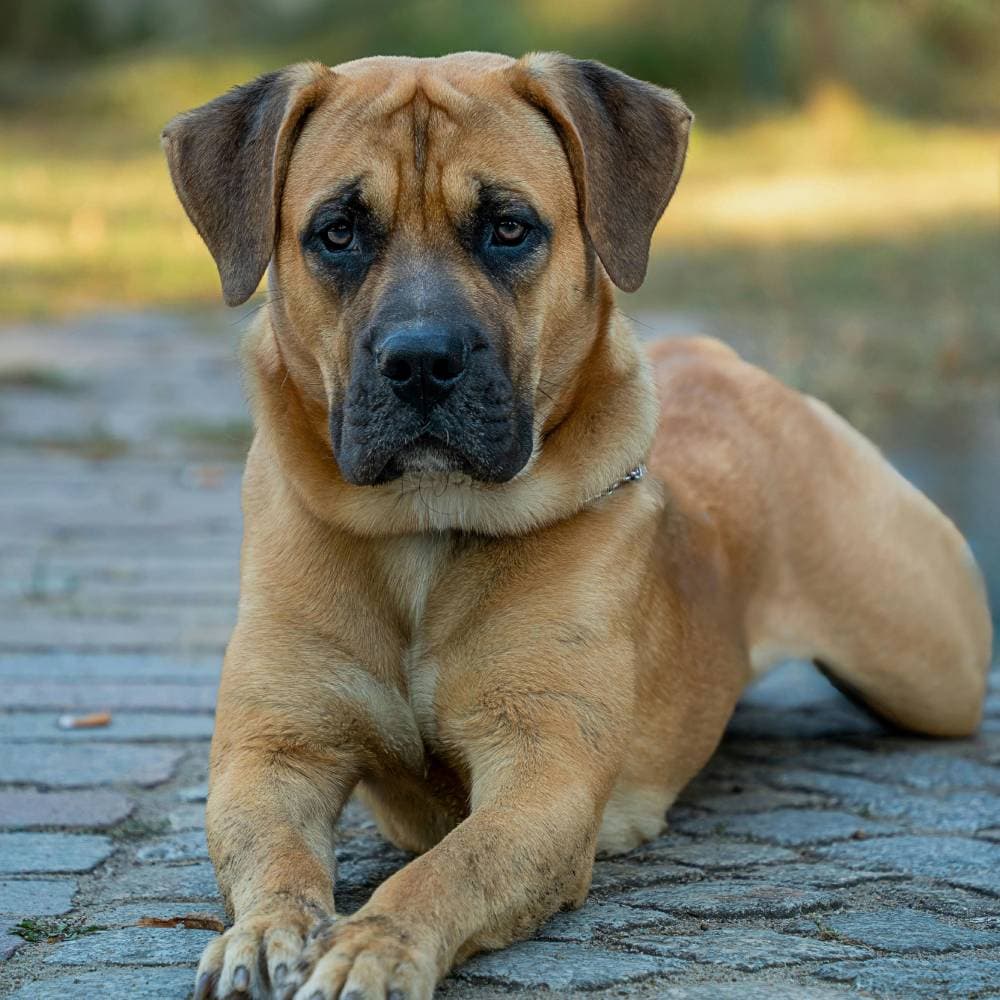
What about the American Bully?
The American Bully — including variants such as the Pocket — does not appear in the 2004 Ministerial Order, but is officially treated as potentially dangerous by the DGAV (Portugal's national veterinary authority). The legal basis is Article 3 of Decree-Law n.º 315/2009, which covers animals with a morphological profile similar to the listed breeds. The DGAV considers that the American Bully displays characteristics consistent with crossbreeding with Pit Bull Terrier and American Staffordshire Terrier, and is therefore subject to the same legal obligations. This classification is reflected in the SIAC registration system for licensing and enforcement purposes.
What you must do if your dog is a potentially dangerous breed
There are several obligations, each with its own deadline. Here is the correct sequence:
1. Register with SIAC
Like all dogs in Portugal, your dog must be microchipped and registered with SIAC by 120 days of age. For potentially dangerous breeds, SIAC registration is the starting point for all other legal obligations.
2. Special licence from the parish council (Junta de Freguesia)
Unlike other dogs — which benefit from a one-year licence exemption after initial registration — potentially dangerous breed dogs are not exempt. The licence must be obtained from the parish council (junta de freguesia) of the owner's area of residence within 30 days of SIAC registration.
The licence must be renewed annually and requires the following documents:
- Signed declaration of responsibility
- Owner's criminal record certificate (updated annually)
- Valid third-party liability insurance
- Proof of sterilisation (where applicable)
- Health booklet with rabies vaccination up to date
- Certificate of completion of the mandatory owner training course
The owner must be at least 16 years old.
3. Sterilisation
Potentially dangerous breed dogs not registered in an officially recognised breed studbook (such as the LOP) must be sterilised between 4 and 6 months of age, under Law n.º 46/2013.
After the procedure, the veterinarian registers the sterilisation in SIAC and the owner has 15 days to present the declaration to the parish council.
4. Third-party liability insurance
Third-party liability insurance covering damages caused by the animal is mandatory, with a minimum insured capital of €50,000, as defined by Ministerial Order n.º 585/2004.
5. Owner training course
The owner is required to complete and pass a training course promoted by the GNR or PSP, as defined by Ministerial Order n.º 317/2015. Enrolling in the course allows the owner to obtain a provisional 3-month licence while awaiting the training date.
6. Dog training
Owners are required to ensure their dog undergoes socialisation and obedience training, which must begin between 6 and 12 months of age. Training may only be provided by a DGAV-certified trainer. A certificate of completion is issued upon successful conclusion.
Rules in public spaces
In public, potentially dangerous breed dogs are subject to specific rules:
- Muzzle required at all times — functional, preventing biting or eating
- Short lead required — maximum 1 metre, attached to collar or harness
- Handler must be at least 16 years old
- Cannot be left unattended — either in public spaces or in the common areas of residential buildings
Housing requirements
Keeping a potentially dangerous breed dog at home requires reinforced safety measures:
- Fencing of at least 2 metres in height in resistant material
- Gaps between bars, gates and walls must not exceed 5 cm — to prevent the dog from escaping or attacking through the fencing
- Visible warning sign indicating the presence and dangerous nature of the animal
What happens if the dog attacks someone
If a potentially dangerous breed dog bites a person or seriously injures another animal outside the owner's property, it is legally reclassified as a dangerous dog. The consequences are:
- The animal is mandatorily taken to an Official Collection Centre (Centro de Recolha Oficial) at the owner's expense
- In cases of serious injury, the animal may be euthanised
- If not euthanised, return to the owner is conditional on the completion of compulsory socialisation and obedience training assessments
Fines for non-compliance
Failure to comply with the legal obligations is a counter-ordination offence under Decree-Law n.º 315/2009:
- Private individuals: between €500 and €3,740
- Companies or organisations: up to €44,890
In cases of negligence or attempt, the amounts are reduced by half.
In summary
- Potentially dangerous breed is a classification by breed, not behaviour
- Dangerous dog is a classification by behaviour — a specific event
- There are 7 official breeds, plus the American Bully under DGAV interpretation
- First-generation crossbreeds with a similar physical profile are also included
- Special licence required from the parish council — within 30 days of SIAC registration
- Licence renewed annually, with updated criminal record certificate
- Sterilisation required between 4 and 6 months (unless registered in an official studbook)
- Third-party liability insurance required — minimum €50,000 insured capital
- Owner training course required (GNR or PSP)
- Dog training required — between 6 and 12 months of age, by a DGAV-certified trainer
- In public: muzzle + lead max. 1 metre + handler aged 16 or over
- Housing: fencing min. 2 metres + max. 5 cm gap + visible warning sign
- Fine for non-compliance: up to €3,740 for private individuals
Sources
- Decree-Law n.º 315/2009, of 29 October — Diário da República
- Law n.º 46/2013, of 4 July — Diário da República
- Ministerial Order n.º 422/2004, of 24 April — List of potentially dangerous breeds
- Ministerial Order n.º 585/2004, of 29 May — Third-party liability insurance
- Ministerial Order n.º 317/2015, of 30 September — Owner training
- DGAV — Dangerous and Potentially Dangerous Animals
- SIAC — Official portal